
A hydrocephalus diagnosis can feel overwhelming, especially when it involves your child. One moment you’re dealing with unexplained headaches or an unusually large head size, and the next, you’re sitting in a neurologist’s office hearing terms like “ventricles” and “CSF buildup” for the first time.
If your doctor has mentioned ETV surgery as a treatment option, you’re probably wondering what it actually involves, whether it’s safe, and how long recovery takes. That’s exactly what we’ll walk through here — in plain language, without the medical jargon overload.
Quick Summary Box
- ETV (Endoscopic Third Ventriculostomy) is a minimally invasive brain surgery that creates a new pathway for cerebrospinal fluid (CSF) to drain normally.
- It’s commonly used to treat obstructive hydrocephalus in both children and adults.
- Unlike shunt surgery, ETV doesn’t involve implanting a permanent device inside the body.
- Success depends on the cause of hydrocephalus, patient age, and overall brain anatomy.
- Recovery typically takes 2 to 4 weeks, though full recovery timelines vary.
- Not every patient is a candidate — a comprehensive evaluation by a pediatric neurosurgeon is essential before deciding.
What Is ETV Surgery?
Endoscopic Third Ventriculostomy, commonly known as ETV surgery, is a neurosurgical procedure used to treat certain types of hydrocephalus — a condition where cerebrospinal fluid builds up inside the brain’s ventricles, causing pressure to rise.
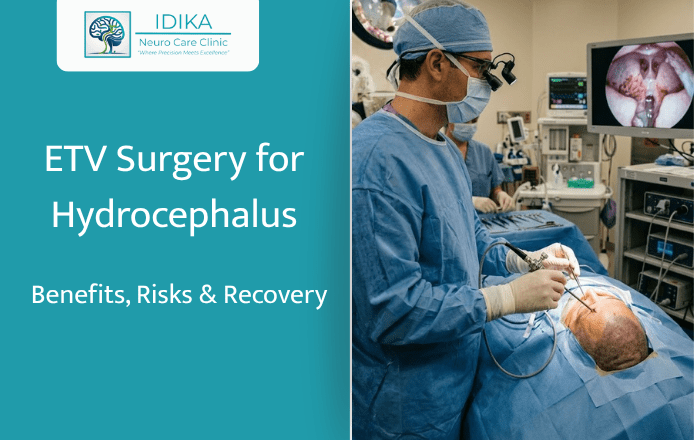
During the procedure, a neurosurgeon uses a small endoscope (a thin tube with a camera) inserted through a tiny opening in the skull. Instead of placing a shunt, the surgeon creates a small hole in the floor of the third ventricle. This allows trapped CSF to flow through a new, natural pathway and get reabsorbed by the body — bypassing the blockage causing the fluid buildup.
Think of it like clearing a blocked drain by creating an alternate route for water to flow, rather than installing a pump system.
Why Does Hydrocephalus Happen?
Hydrocephalus develops when there’s an imbalance between how much CSF is produced and how much gets absorbed or drained. This imbalance can happen due to:
- A blockage somewhere in the brain’s ventricular system (obstructive hydrocephalus)
- Poor CSF absorption (communicating hydrocephalus)
- Congenital brain malformations
- Infections like meningitis
- Bleeding in the brain (especially in premature infants)
- Tumors pressing on CSF pathways
ETV surgery works best when there’s a clear obstruction, which is why it’s most commonly recommended for obstructive hydrocephalus rather than the communicating type.
Symptoms That May Indicate Hydrocephalus
In infants:
- Rapidly increasing head size
- Bulging soft spot (fontanelle)
- Irritability, poor feeding
- Downward-looking eyes (“sunsetting” eyes)
In older children and adults:
- Persistent headaches, especially in the morning
- Nausea or vomiting
- Blurred or double vision
- Balance and coordination problems
- Difficulty concentrating or memory issues
If you’re noticing several of these signs together, it’s worth getting a proper evaluation rather than waiting to see if things improve on their own.
How Is Hydrocephalus Diagnosed?
Diagnosis usually involves a combination of:
- Clinical examination — checking head circumference, reflexes, and developmental milestones
- MRI or CT scan — to visualize ventricle size and identify blockages
- Ultrasound — often used for infants through the open fontanelle
- ICP monitoring — in some cases, to measure pressure inside the skull
A precise diagnosis matters because treatment decisions — including whether ETV surgery is suitable — depend heavily on the exact cause and location of the CSF blockage.
Treatment Options for Hydrocephalus
ETV Surgery vs. Shunt Surgery
| Feature | ETV Surgery | Shunt Surgery |
|---|---|---|
| Device implanted | No | Yes (permanent tube + valve) |
| Infection risk | Lower | Higher (foreign device) |
| Long-term maintenance | Minimal | May need revisions |
| Best suited for | Obstructive hydrocephalus | Both obstructive and communicating types |
| Reversibility | Not reversible once healed | Can be removed/replaced |
| Recovery time | Usually shorter | Varies |
Not every patient qualifies for ETV. Age, the location of the blockage, and prior surgeries all play a role in whether this is a viable option — which is why an individualized treatment plan matters more than a one-size-fits-all approach.
Benefits of ETV Surgery
- No permanent hardware left inside the brain
- Lower long-term infection risk compared to shunts
- Fewer follow-up revision surgeries in eligible patients
- Shorter hospital stay in many cases
- Allows CSF to flow through a more natural pathway
That said, benefits vary from patient to patient, and outcomes depend on individual anatomy and the underlying cause of hydrocephalus.
Risks and Possible Complications
Like any brain surgery, ETV surgery carries risks, including:
- Bleeding
- Infection
- CSF leakage
- Temporary or, rarely, persistent neurological changes
- Closure of the created opening over time (requiring repeat surgery)
It’s worth noting that ETV isn’t always successful long-term for every patient — some may eventually need a shunt if the new pathway narrows or closes. This is discussed in detail during pre-surgical counseling, and patients should never feel like outcomes are guaranteed either way.
Recovery After ETV Surgery
Recovery Timeline
| Time Period | What to Expect |
|---|---|
| Day 1–2 | Hospital monitoring, pain management |
| Day 3–5 | Gradual mobility, discharge planning |
| Week 1–2 | Rest at home, wound care, limited activity |
| Week 2–4 | Gradual return to normal activities |
| Month 1–3 | Follow-up scans to confirm CSF flow is stable |
Most children bounce back faster than adults expect, but it’s still important to avoid strenuous activity, contact sports, or swimming until the surgeon gives the green light.
Home Care Tips During Recovery
- Keep the surgical site clean and dry as advised
- Watch for fever, unusual drowsiness, or vomiting
- Stick to follow-up appointments — even if the child seems fine
- Avoid skipping scheduled MRI scans, as these confirm the ETV is functioning properly
Diet and Lifestyle After Surgery
There’s no special “hydrocephalus diet,” but general recovery nutrition helps:
- Protein-rich foods to support healing
- Adequate hydration
- Fiber-rich foods to avoid constipation-related straining
- Avoiding heavy physical strain for the first few weeks
Rest, patience, and close observation matter more than any specific food list during this period.
When Should You Consult a Pediatric Neurosurgeon?
You should seek a specialized consultation if:
- Your child shows signs of increasing head size or developmental delays
- Headaches, vomiting, or vision changes persist or worsen
- A previous shunt appears to be malfunctioning
- Imaging has confirmed hydrocephalus and you’re exploring surgical options
- You want a second opinion before committing to a treatment plan
A timely, evidence-based treatment approach can make a meaningful difference, and waiting too long to investigate symptoms isn’t advisable.
Patients looking for ETV Surgery in Mumbai or ETV Surgery in Thane can consult Dr. Harshal Agrawal, a Pediatric Neurosurgeon with over 12 years of experience, who consults at MRR Children’s Hospital and Idika Neuro Care Clinic. A comprehensive evaluation helps determine whether ETV is the appropriate route, depending on the patient’s condition.
Latest Advances in Hydrocephalus Treatment
Neuroendoscopy techniques have improved significantly over the past decade, with better imaging integration during surgery helping neurosurgeons plan more precise pathways for CSF drainage. Combined procedures — such as ETV with choroid plexus cauterization (ETV-CPC) — are also being used in select infant cases, though this remains a decision made on a case-by-case basis by the treating hydrocephalus surgery specialist.
Consult Dr. Harshal Agrawal for ETV Surgery in Mumbai & Thane
If your family is navigating a hydrocephalus diagnosis, having the right specialist by your side makes the process less overwhelming. Dr. Harshal Agrawal is a Pediatric Neurosurgeon with 12+ years of experience, offering ETV surgery consultation and pediatric brain surgery evaluations at MRR Children’s Hospital and Idika Neuro Care Clinic across Mumbai & Thane.
Every child’s condition is different, and the right treatment path whether ETV, shunt placement, or continued monitoring depends on a thorough assessment of the individual case. If you’re looking for a pediatric neurosurgeon in Mumbai or a pediatric neurosurgeon in Thane, scheduling a consultation can help you understand your child’s specific situation and available options.
Frequently Asked Questions
1. What is ETV surgery used for?
ETV surgery treats certain types of hydrocephalus by creating a new pathway for cerebrospinal fluid to drain, bypassing a blockage in the brain’s ventricular system. It’s mainly used for obstructive hydrocephalus rather than communicating hydrocephalus.
2. Is ETV surgery safe for infants?
ETV can be performed in infants, though success rates vary compared to older children and adults due to differences in brain anatomy. A pediatric neurosurgeon evaluates each case individually before recommending it.
3. How long does ETV surgery take?
The procedure itself usually takes about 45 minutes to an hour, though total time in the operating room, including anesthesia, may be longer.
4. What is the success rate of ETV surgery?
Success rates vary based on age, cause of hydrocephalus, and blockage location. Some patients achieve long-term relief, while others may eventually require a shunt if the created pathway narrows.