
Have you noticed your child’s shoulders looking uneven? Or maybe their clothes don’t hang quite right? You’re not imagining things—and you’re doing the right thing by paying attention.
Scoliosis in children is more common than most parents realize. It’s a condition where the spine curves sideways instead of growing straight. About 2-3 out of every 100 children develop scoliosis, and while that might sound scary, here’s the good news: when spotted early, most cases can be managed successfully.
As a parent, you know your child best. Those little things you notice—like one hip sitting higher than the other or a slight lean when they stand—matter. Understanding the early signs of scoliosis in children helps you take action at the right time, giving your child the best possible outcome.
Let’s walk through what you need to know about this condition, from spotting the warning signs to understanding what treatment options work.
What Is Scoliosis in Children?
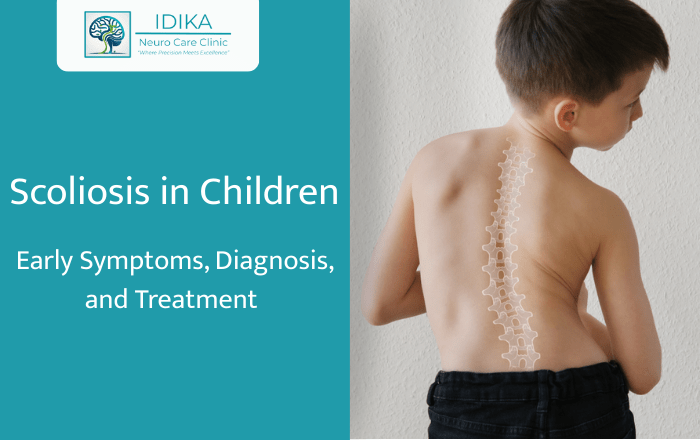
Think of your child’s spine as a straight line running down their back. With scoliosis, that line curves to the side, forming a “C” or “S” shape. This usually happens during growth spurts between ages 10 and 18.
The most important thing to know? Scoliosis isn’t caused by bad posture, heavy backpacks, or how your child sits. In 8 out of 10 cases, doctors don’t know exactly why it happens—it’s just how some spines grow. It does tend to run in families, so if you had scoliosis, your children might be at higher risk.
Girls are more likely to develop scoliosis in children than boys, especially during puberty when they’re growing quickly.
7 Early Warning Signs Every Parent Should Know
1. Uneven Shoulders
One shoulder blade sticks out more than the other, or one shoulder sits higher. You might notice clothing straps sliding off one side.
2. Unequal Waistline
One side of the waist looks higher or more defined. The space between your child’s arm and body looks different on each side.
3. One Hip Higher Than the Other
Their hips look tilted when standing. Pants or skirts hang unevenly, and it’s especially noticeable in fitted clothes.
4. Rib Hump When Bending
Ask your child to bend forward at the waist. If one side of their rib cage appears higher than the other, this is a key sign of scoliosis.
5. Leaning to One Side
Your child’s whole body seems to lean slightly left or right. Their head doesn’t look centered over their body.
6. Back Pain
While not as common, some children with scoliosis do feel discomfort in their back or shoulders, especially after activity.
7. Visible Spine Curve
When looking at your child’s bare back, you can see the spine curving instead of running straight down.
Quick Check: Have your child stand in front of a mirror wearing minimal clothing. Look for any differences between the left and right sides. If something seems off, schedule a doctor’s visit.
How Doctors Diagnose Scoliosis
Many schools do simple scoliosis screenings. Your child bends forward, and a nurse or doctor checks if one side of the back appears higher. This isn’t a diagnosis—it just tells you to follow up with a doctor.
At the doctor’s office, here’s what happens:
▸ Physical Exam: The doctor checks shoulder height, waist symmetry, and hip alignment. They’ll do the forward bend test and might use a tool to measure any curve.
X-rays: These show exactly how curved the spine is. The curve is measured in degrees (called the Cobb angle):
- Less than 10 degrees: Not considered scoliosis
- 10-25 degrees: Mild—often just needs monitoring
- 25-40 degrees: Moderate—bracing usually helps
- Over 40 degrees: More serious—may need surgery
Most children fall into the mild category, which is great news.
Treatment Options That Work
▸Monitoring
For mild curves (under 25 degrees), doctors often recommend regular check-ups every 4-6 months. They’ll take X-rays to see if the curve changes, especially during growth spurts. Many mild curves stay stable and never need treatment.
▸Bracing
This is the most common treatment for scoliosis in children with curves between 25-40 degrees. The brace is custom-made to fit your child and typically worn 16-23 hours daily. Your child can remove it for bathing and sports.
Studies show bracing stops the curve from getting worse in 70-90% of children. Yes, adjustment takes time, but many kids wear braces successfully while living completely normal lives—playing sports, going to school, and hanging out with friends.
▸Physical Therapy
Special exercises can strengthen the muscles supporting the spine. Methods like the Schroth technique focus on the specific curve pattern your child has. While exercise alone won’t cure scoliosis, it helps with posture, reduces discomfort, and improves body awareness.
▸Surgery
Surgery is only needed for curves over 45-50 degrees or curves that keep getting worse despite bracing. The most common procedure is spinal fusion, where the spine is straightened and stabilized with metal rods. Recovery takes several months, but results are typically very good. Most children return to their regular activities within a year.
Common Questions Parents Ask
Q1. Will the curve get worse?
Not necessarily. Mild curves often stay the same, especially after growth stops. That’s why monitoring is so important.
Q2. Should my child avoid sports?
No! Staying active is actually helpful. Swimming, yoga, and most sports are fine and help maintain strength and flexibility.
Q3. Will my child always need a brace?
Bracing is only needed during the growing years. Once your child stops growing, the brace comes off for good.
Q4. Can other children in the family get it?
There is a genetic link. If one child has scoliosis, siblings have about a 20-30% chance of developing it too. Regular screening helps catch it early.
Living Well With Scoliosis
Your child can live a full, active life with scoliosis. Here’s what helps:
- Talk openly about the condition and listen to their concerns
- Keep up with regular doctor visits
- Encourage activities they enjoy
- Focus on their strengths, not limitations
- Connect with support groups where they can meet other kids with scoliosis
Remember, this condition doesn’t define your child. With the right support and care, they can do everything their friends do.
When to See a Doctor
Don’t wait if you notice:
- Any of the warning signs mentioned above
- Changes in posture or walking
- Back pain that won’t go away
- A previously diagnosed curve that looks worse
Early detection means more treatment options and better results.
Take the Next Step
If you’ve noticed any warning signs or simply want peace of mind, schedule a screening. A simple check-up can answer your questions and help you understand what your child needs.
Scoliosis in children is manageable when caught early. You’re already taking the right step by learning about it.
Concerned About Your Child’s Spine? Talk to a Specialist Today
Dr. Harshal Agrawal, a child neurosurgeon, specializes in treating scoliosis in children at two convenient locations:
📍 MRR Children’s Hospital, Thane
📍 Idika Neuro Care Clinic, Andheri West
Dr. Agrawal offers:
- Thorough screening and diagnosis
- Non-surgical treatment options including bracing
- Individual treatment plans for each child
- Caring support for both children and parents
Early treatment makes a real difference.
📞 Book an appointment today and get the answers you need for your child’s spine health.